I grew up in, and still live in, Northeast Ohio. I have long suffered from rooting for the Indians, now known as the Guardians. It hasn’t been a pleasant journey. The last time we won a World Series was 1948, and I do not see another victory on the horizon. So it goes.
I woke up early this morning after hearing we traded for Patrick Bailey, a two-time Gold Glove-winning catcher. I knew Bailey was good. I decided to see just how exceptional he is behind the plate. I used 2025 data for the following study.
Baseball analysis often reduces catchers to a handful of familiar metrics. Framing. Pop time. Arm strength. Caught stealing percentage. Blocking runs. Yet the position itself resists simple categorization. Some catchers suppress the running game through elite exchanges and quick releases. Others survive on receiving skills and pitch presentations. A few manage to combine multiple defensive strengths into unusually complete profiles.
This analysis attempts to move beyond simple rankings by examining the structure of catcher defense. Rather than asking merely who the best defensive catchers were, I wanted to explore a deeper question: Are there distinct defensive ecosystems among modern MLB catchers? Note that this post does not consider how a catcher handles a pitching staff.
To investigate this, I combined multiple publicly available defensive datasets covering:
- blocking
- throwing
- framing
- exchange time
- pop time
- arm strength
- caught stealing metrics
- related subcomponents
Every metric was standardized using z-scores to allow catchers to be compared on a common scale (something I often do). From there, the project unfolded in several stages:
- creation of composite defensive scores
- principal component analysis (PCA)
- hierarchical clustering
- dendrogram construction
- an “Unusualness Index” measuring statistical distance from the average catcher profile
The result was less a ranking exercise and more an exploration of what can be termed defensive geography. And yes, all this work was done because I was curious about our new catcher.
Building the Defensive Landscape
The first step was to construct an overall defensive score across three broad categories: blocking, throwing, and framing. Each category itself was built from multiple underlying z-scored metrics.

This approach allowed catchers to be evaluated across multiple dimensions simultaneously rather than through isolated statistics. But even this composite score quickly revealed an important limitation: Two catchers could arrive at nearly identical defensive totals through very different defensive pathways. That observation became the central motivation for the clustering analysis.
PCA and Defensive Geography
Principal Component Analysis compresses high-dimensional data into a smaller number of interpretable axes. I don’t know about you, but I find it very difficult to think in anything more than two dimensions.
In this dataset:
- PC1 explained approximately 36% of total variance
- PC2 explained roughly 19%
Together, they created a two-dimensional map of modern catchers’ defensive strategies.
The PCA visualization immediately suggested that catchers naturally separate into different defensive archetypes rather than forming a single continuous population. The discussion does get nuanced.
Some clustered around framing skill. Others around throwing and athleticism. A handful appeared unusually isolated. Most notably, Patrick Bailey emerged not only as one of the strongest overall defenders in the dataset, but also one of the most statistically unusual.
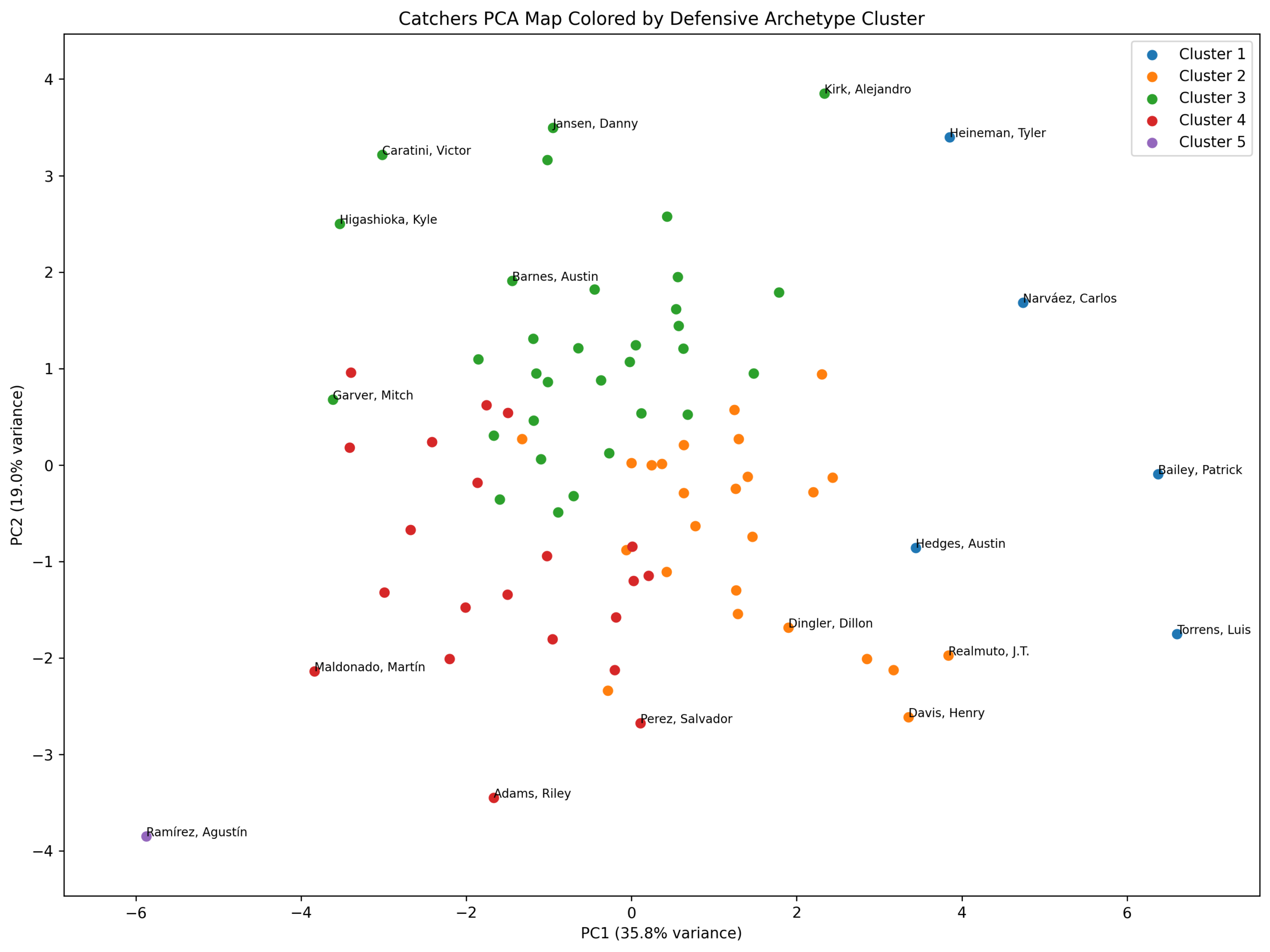
Figure 1: PCA Map of Defensive Catcher Profiles
The clusters in the PCA plot represent groups of catchers with similar overall defensive structures rather than similar rankings. A catcher can therefore occupy the same broad defensive tier as another player while still existing within an entirely different defensive ecosystem. This result somewhat surprised me.
Hierarchical Clustering and Catcher Archetypes
To explore those ecosystems further, I applied Ward hierarchical clustering to the standardized defensive profiles.
Unlike simple rankings, hierarchical clustering groups players according to the shape of their statistical profiles. I find this to be an interesting way to look at the data. For example, Patrick Bailey and Alejandro Kirk finished with very similar overall defensive scores. Yet the clustering analysis separated them because they appear to provide defensive value through different skill combinations.
Bailey profiles as a rare hybrid:
- elite framing
- strong throwing traits
- positive blocking metrics
Kirk, meanwhile, appears more specialized toward:
- framing
- blocking
- receiving skill
The dendrogram reveals these structural differences visually.
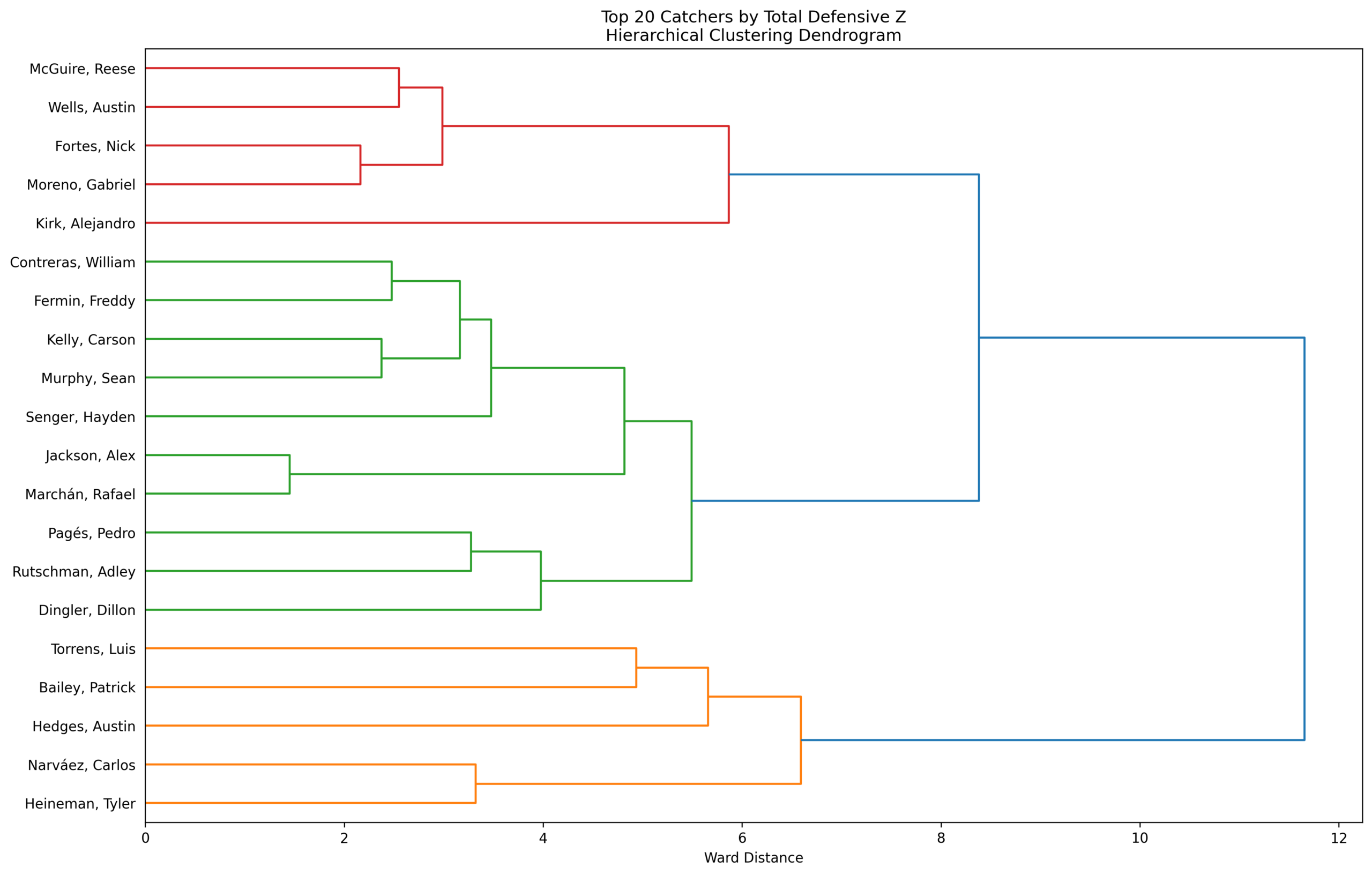
Figure 2: Dendrogram of Top Defensive Catchers
Several major catcher ecosystems emerged:
Cluster 1: Elite Defensive Hybrids
These catchers combined strong framing with excellent throwing skills. Representative players:
- Patrick Bailey
- Austin Hedges
- Tyler Heineman
Cluster 2: Athletic Throwing Specialists
These catchers leaned heavily into:
- arm strength
- exchange speed
- suppression of the running game
Representative players:
- J.T. Realmuto
- Endy Rodríguez
Cluster 3: Balanced Traditional Catchers
The statistical center of gravity for the position.
Competent across categories without extreme specialization.
Representative players:
- Gabriel Moreno
- Christian Vázquez
Cluster 4: Offense-First or Declining Defenders
Catchers whose defensive metrics trended negatively despite offensive value or prior reputations.
Representative players:
- Salvador Perez
- Yainer Diaz
Cluster 5: Extreme Outliers
In this case, Agustín Ramírez emerged as a statistically isolated profile unlike any other catcher in the dataset.
The Unusualness Index
One of the more interesting outputs of the project was the creation of an “Unusualness Index.” Conceptually, it measures how far a catcher’s defensive profile lies from the league-average catcher.
Mathematically:

Large values indicate:
- rare defensive combinations
- extreme strengths or weaknesses
- hybrid skill profiles
- statistical isolation
Interestingly, some of the most unusual catchers were not necessarily the best overall defenders. That distinction may be one of the most important findings in the study. Elite value and statistical uniqueness are related, but they are not identical concepts.
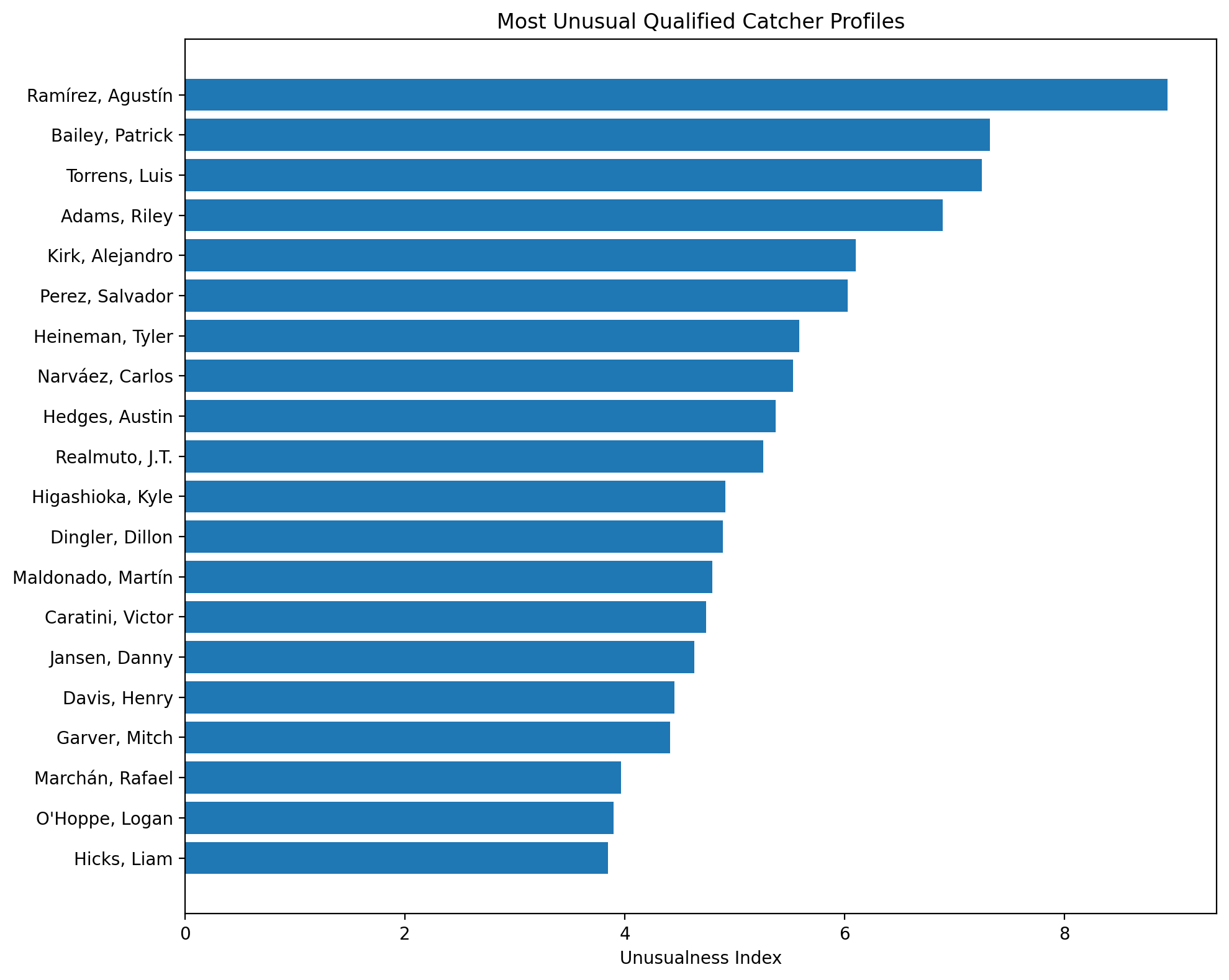
Figure 3. Most unusual catchers in 2025.
The Patrick Bailey Question
Perhaps the most fascinating result involved Patrick Bailey. Bailey ranked near the top of the defensive leaderboard while also appearing among the most unusual defensive profiles in the dataset. That combination is rare.
Most players become unusual because they possess one overwhelming specialization or weakness. Bailey appears unusual because he performs unusually well across multiple difficult defensive dimensions simultaneously.
The clustering analysis, therefore, suggests that Bailey is not merely “good.” He may represent a relatively uncommon defensive archetype altogether. The man is special.
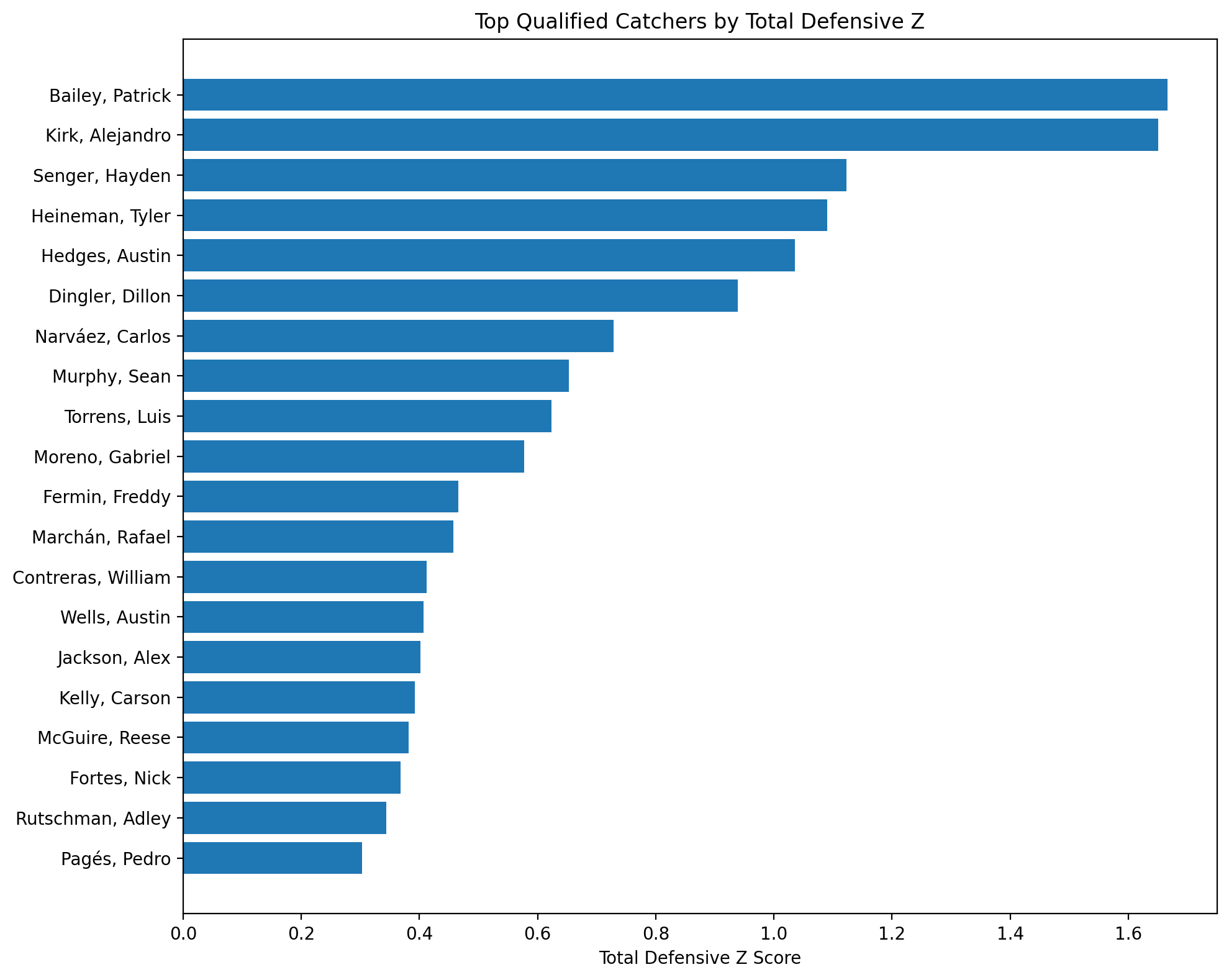
Figure 4. Most accomplished defensive catchers in 2025.
Final Thoughts
Traditional baseball analysis often searches for single metrics capable of defining defensive quality. But catcher defense appears fundamentally multidimensional.
There is no single pathway to defensive value behind the plate.
Some catchers thrive through receiving.
Others through athleticism.
Others through balance.
A few through genuinely rare hybrid profiles.
The PCA map and dendrogram reveal something that simple rankings cannot: catcher defense is not a ladder. It is an ecosystem. And within that ecosystem, certain players appear to occupy unusually isolated terrain. I can’t wait to see Patrick Bailey in a Guardians uniform.

Sounds like the Tribe might have a great one!
I think so. His stats are highly unusual. He is elite in many categories. I am looking forward to seeing him. Our team now has two of the top five defensive catchers in the game. I like it.