Introduction
Most baseball analysis begins at the edges, the extremes of performance.
We study the greatest players, the worst players, the outliers, the records, the peaks, the collapses, and the seasons that do not seem to belong to ordinary baseball history. This is natural. The edges of the distribution are dramatic. They are diagnostic. They produce arguments.
But a distribution has a center. If the earlier chapters asked which third basemen stood farthest above their positional peers, this chapter asks a different question:
Which third basemen were closest to the positional norm?
This is not the same as asking who was mediocre. It is not the same as asking who was bad. A player can be a qualified major-league regular and still sit near the offensive center of his position. In fact, that is the point. The most average regulars are not failures. They are the players who define what “normal” looked like for a position.
For third base, this produces a surprisingly interesting result. The most average multi-season third baseman in the combined Model A and Model C framework is Casey Blake. Other names near the top include Edwin Encarnacion, Phil Garner, Ty Wigginton, Roy Howell, Tony Boeckel, Ossie Bluege, Todd Zeile, Ken McMullen, and Willie Jones.
That list does not look like a Hall of Fame ballot. It looks like something more useful for this chapter: the position’s working center.
The study of dominance tells us who escaped the ordinary. The study of averageness tells us what the ordinary was.
The Logic of Averageness
The earlier dominance models were built from z-scores. A z-score measures how far a player is from the same-season positional average in a given category.
The basic formula is:
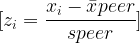
Where:



A player with a z-score of zero is exactly average in that category. A player with a z-score of +1 is one standard deviation above average. A player with a z-score of -1 is one standard deviation below average.
The dominance chapters cared about positive separation. The higher the combined z-score, the more dominant the player-season.
Averageness reverses the question.
Instead of asking:
How far above average was this player?
It asks:
How close to average was this player?
That requires a Euclidean distance measure.
A player can be above average in one category and below average in another. For example, a third baseman might walk more than average but hit for less power. Another might hit for average power but run less than average. The question is not whether the z-scores are positive or negative. The question is how far they are from zero.
To measure that distance, this chapter uses a Typicality Score.
The Typicality Equation
For a player-season with (k) z-score components, the Typicality Score is:
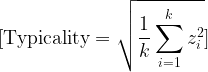
This is the root-mean-square distance from zero.
Lower is more average.
A score of 0 would mean the player was exactly average in every category. In practice, no real player-season does that. But the closer the score is to 0, the closer that season is to the offensive center of the position.
For Model C, the categories are:
OBP
ISO
BB/PA
Low SO/PA
Net SB/PA
R/PA
RBI/PA
So the Model C Typicality Score is:
For Model A, the categories are:
OBP
SLG
HR/PA
BB/PA
R/PA
RBI/PA
So the Model A Typicality Score is:

This creates two ways of measuring averageness. Model A measures closeness to the traditional power, patience, and run-production center. Model C measures closeness to a broader offensive-skill center.
Because both models have value, this chapter also uses a combined measure:

This combined score identifies players who were average under both definitions.
Seasons and Careers Are Different Questions
There are two kinds of averageness.
The first is single-season averageness. This asks which individual player-season was closest to the same-season positional norm.
The second is multi-season regular averageness. This asks which players stayed close to the positional norm over multiple qualified seasons.
Those questions are not the same.
A player can have one perfectly ordinary season and then never repeat it. Another player can have six, eight, or eleven qualified seasons that all sit near the positional center. The second player is more interesting for the idea of a “typical regular.”
For that reason, this chapter uses a minimum standard for regulars:
At least five qualified third-base seasons
The single-season list tells us which seasons were most typical.
The regular list tells us which careers were most typical.
The Most Average Third-Base Seasons
The first result looks only at Model C. Model C is useful here because it includes the broadest offensive shape: on-base ability, isolated power, walks, contact, baserunning, run scoring, and RBI rate.
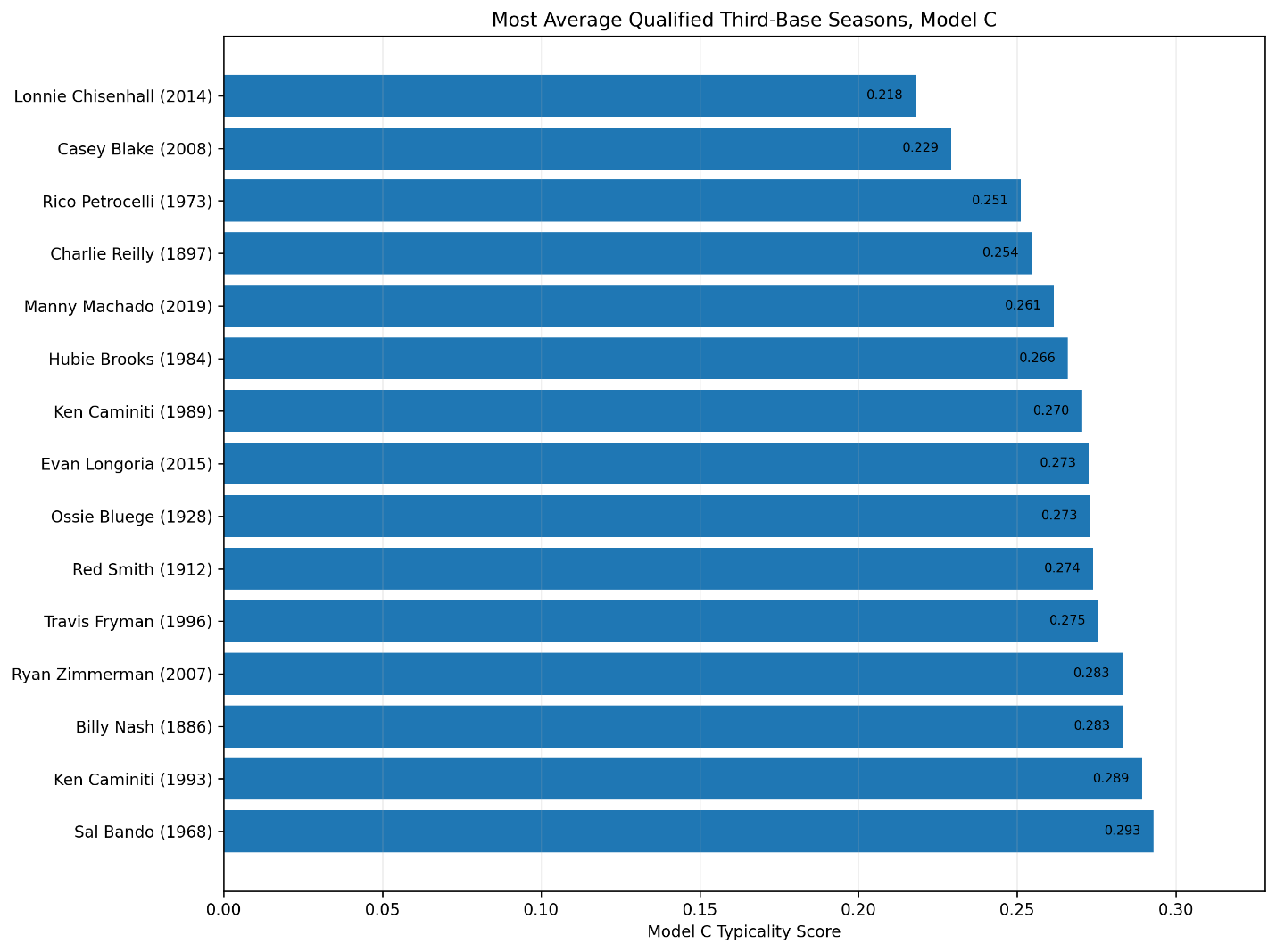
The most average Model C third-base season was Lonnie Chisenhall in 2014, with a Typicality Score of 0.218. That is extremely close to the center of the third-base offensive distribution.
The top ten Model C third-base seasons were:
| Rank | Player-Season | Model C Typicality |
|---|---|---|
| 1 | Lonnie Chisenhall, 2014 | 0.218 |
| 2 | Casey Blake, 2008 | 0.229 |
| 3 | Rico Petrocelli, 1973 | 0.251 |
| 4 | Charlie Reilly, 1897 | 0.254 |
| 5 | Manny Machado, 2019 | 0.261 |
| 6 | Hubie Brooks, 1984 | 0.266 |
| 7 | Ken Caminiti, 1989 | 0.270 |
| 8 | Evan Longoria, 2015 | 0.273 |
| 9 | Ossie Bluege, 1928 | 0.273 |
| 10 | Red Smith, 1912 | 0.274 |
This list immediately shows why “average” should not be used as an insult. Manny Machado and Evan Longoria appear in the top ten. These were not meaningless players. They were established major-league third basemen whose specific seasons happened to sit close to the offensive center of the position.
That is an important distinction. Averageness is not career quality. It is a shape. It is in proximity to the positional baseline.
Chisenhall’s 2014 season is a good example. His OBP, isolated power, walk rate, strikeout profile, baserunning contribution, runs, and RBI rate were all close to what qualified third basemen were doing in that season. No one category pulled him far from the center. That is what the Typicality Score captures.
Casey Blake’s 2008 season is also important because Blake later becomes the leading combined multi-season regular. His appearance near the top of the single-season list is not accidental. Blake’s offensive profile repeatedly hovered near the middle of the third-base distribution.
The Most Average Multi-Season Third Basemen
Single seasons are interesting, but the more important question is sustained averageness.
For multi-season regulars, the combined Model A and Model C ranking is the best main list. It identifies players who were not merely average under one offensive definition, but close to the positional center under both.
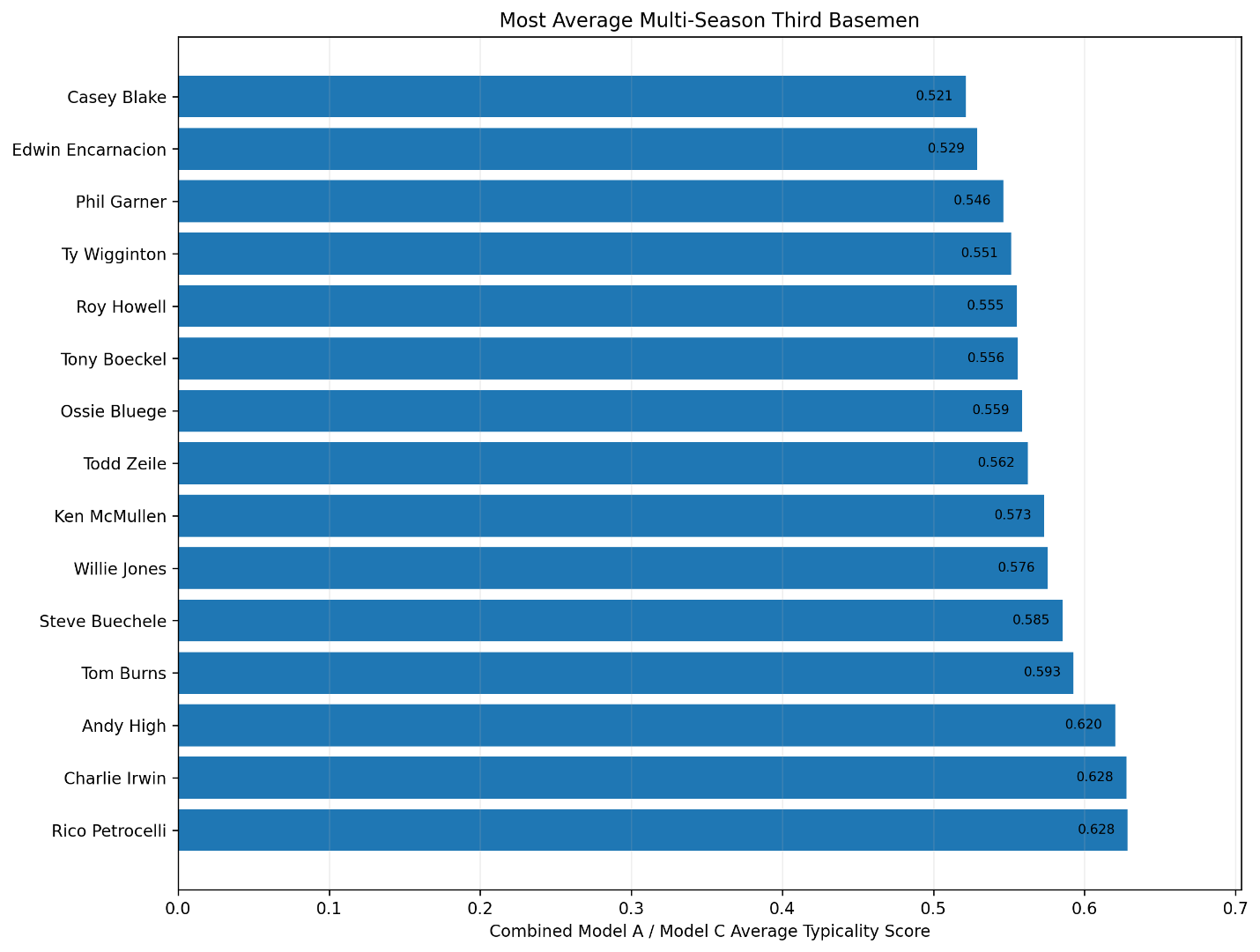
The top fifteen combined third-base regulars were:
| Rank | Player | Years | Qualified Seasons | Combined Avg. Typicality |
|---|---|---|---|---|
| 1 | Casey Blake | 2003–2010 | 6 | 0.521 |
| 2 | Edwin Encarnacion | 2006–2010 | 5 | 0.529 |
| 3 | Phil Garner | 1977–1986 | 7 | 0.546 |
| 4 | Ty Wigginton | 2003–2011 | 5 | 0.551 |
| 5 | Roy Howell | 1975–1980 | 6 | 0.555 |
| 6 | Tony Boeckel | 1919–1923 | 5 | 0.556 |
| 7 | Ossie Bluege | 1923–1933 | 10 | 0.559 |
| 8 | Todd Zeile | 1991–2003 | 11 | 0.562 |
| 9 | Ken McMullen | 1965–1972 | 8 | 0.573 |
| 10 | Willie Jones | 1949–1959 | 11 | 0.576 |
| 11 | Steve Buechele | 1986–1994 | 8 | 0.585 |
| 12 | Tom Burns | 1886–1890 | 5 | 0.593 |
| 13 | Andy High | 1922–1929 | 7 | 0.620 |
| 14 | Charlie Irwin | 1894–1902 | 8 | 0.628 |
| 15 | Rico Petrocelli | 1971–1975 | 5 | 0.628 |
The headline is simple:
Casey Blake is the most average multi-season third baseman in the combined Model A and Model C framework.
Again, that should not be read as an insult. Blake was a useful major-league player. His ranking means that, across his qualified third-base seasons, he stayed unusually close to the offensive center of the position.
That is a different kind of regularity.
The same can be said for Todd Zeile and Willie Jones. Both had long third-base regular profiles. Their inclusion is especially useful because they were not merely one-season accidents. Zeile had eleven qualified seasons in this framework. Willie Jones also had eleven. They represent sustained proximity to the positional norm.
Ossie Bluege is another useful case. He had ten qualified third-base seasons and ranks seventh in the combined list. That suggests a long career near the center of the third-base offensive distribution.
The top of the list is not dominated by one era. It includes nineteenth-century players, early twentieth-century players, mid-century players, and modern players. That matters because the method compares each player only to his same-season positional peers. A player from 1897 is not being compared directly to a player from 2008. Each is being compared to the third-base norm of his own season.
Model A Versus Model C Averageness
The combined list is useful because a player can be average under one model but less average under another.
The next figure compares Model A average typicality with Model C average typicality for third-base regulars.
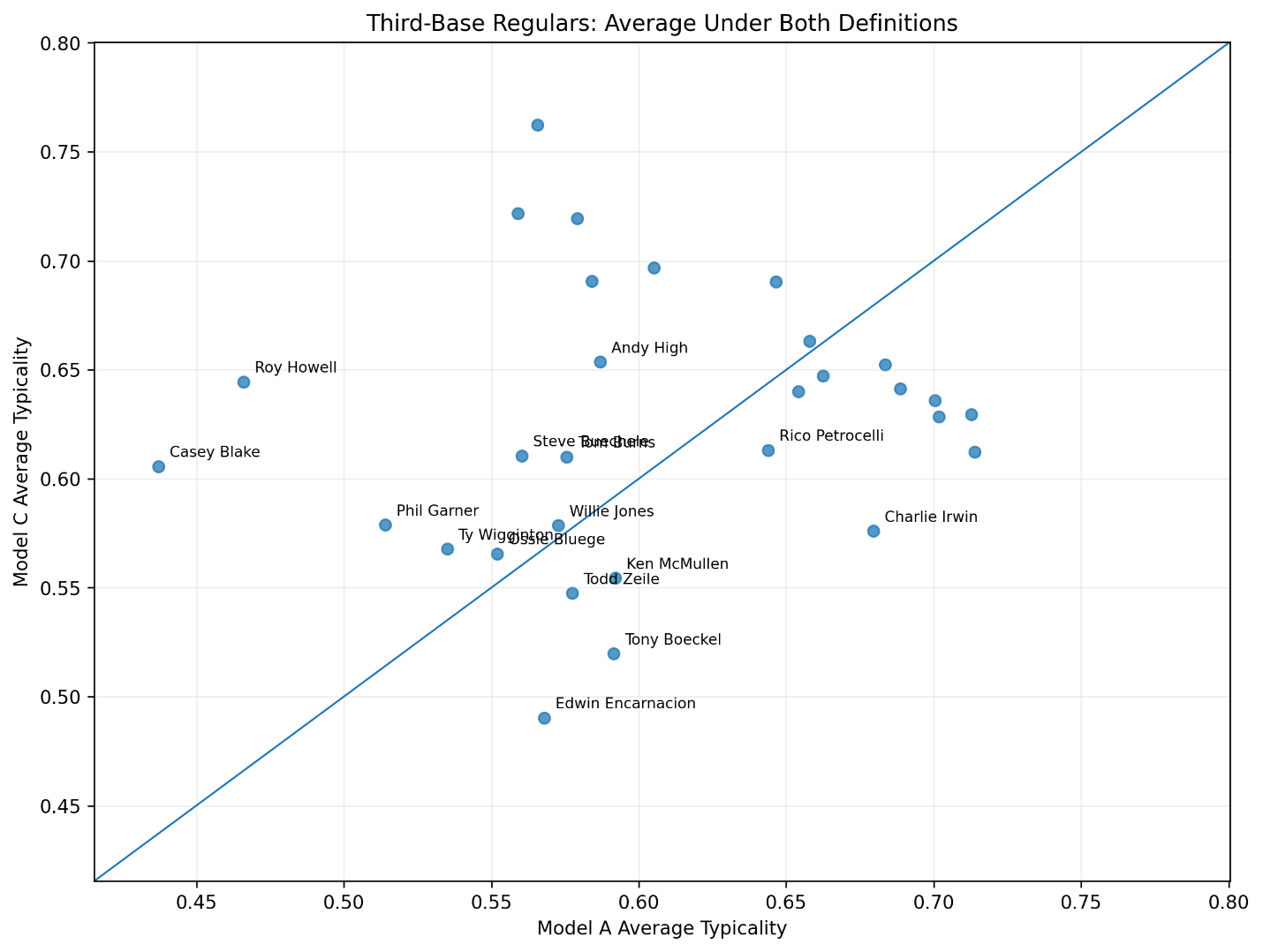
The diagonal line represents equal typicality under both models. Players near the lower-left are the most average under both definitions. Players far from the line are more average under one model than the other.
This figure helps explain why Casey Blake leads the combined list. He is not merely low in Model A or low in Model C. He sits near the low end of both.
Edwin Encarnacion is different. He ranks first in Model C regular typicality but ninth in Model A. That means his early third-base seasons were especially average under the broader Model C framework, but somewhat less centered under the Model A power/run-production framework.
Roy Howell is the reverse case. He ranks second in Model A but twentieth in Model C. That suggests he looked very typical under the Model A categories but less so once Model C added contact and net stolen-base value.
Todd Zeile is an interesting middle case. He ranks third in Model C regular typicality and twelfth in Model A, resulting in a strong combined ranking. His long qualified window makes him one of the better examples of a sustained third-base regular near the offensive center.
This is why two models help. Averageness, like dominance, depends on definition. A player can be average in a power model and less average in a broader model, or the reverse.
The combined measure rewards players who remain near the center regardless of the offensive lens used.
Season Averageness Versus Career Profile Averageness
There is one more distinction worth making.
A player’s average season Typicality Score measures how close his seasons were to average, season by season.
But we can also ask about his career profile. This takes each player’s average z-score profile across his qualified seasons and then calculates the distance of that career profile from zero.
In simplified form:

Then:
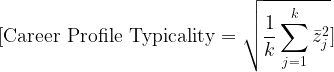
This is slightly different from the typicality of the average season. A player might have individual seasons that vary above and below average, but cancel each other out over a career. Another player might be consistently a little above average in one category and below average in another.
The next figure compares these two forms of averageness.
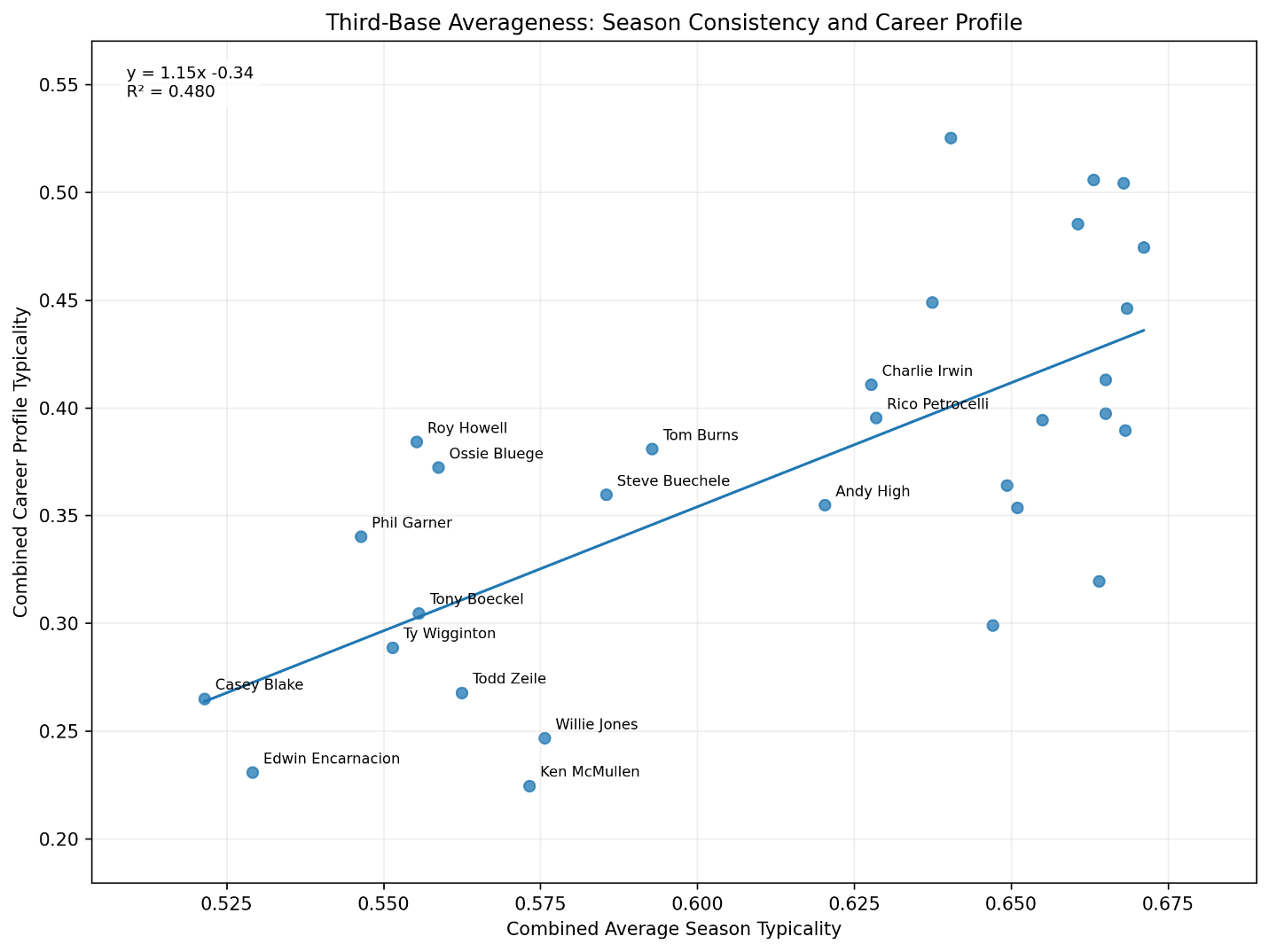
The lower-left region is the ideal location for sustained averageness. Players there were not only close to average season by season, but their career profiles also remained close to the center.
Casey Blake, Edwin Encarnacion, Todd Zeile, Ken McMullen, Willie Jones, Tony Boeckel, and Ty Wigginton all sit in the more typical region. This strengthens the conclusion that they were not merely average by one mathematical accident. Their overall profiles were also close to the third-base center.
This distinction could become important in later positional chapters. Some players may be average because their strengths and weaknesses cancel across a career. Others may be average because each individual season is consistently centered. Those are subtly different forms of ordinary.
Why Casey Blake Leads
Casey Blake’s combined result is useful because it feels intuitively plausible.
He was a solid regular, not a star. He had power, but not elite power. He walked some, struck out some, drove in runs, scored runs, and occupied third base without becoming a positional outlier. His offensive profile was useful, but it did not pull hard toward any extreme.
That is exactly what the Typicality Score is designed to find.
Blake’s 2008 season was the second-most average Model C third-base season in the dataset. Across his qualified third-base seasons from 2003 to 2010, he ranked first in Model A regular typicality and tenth in Model C regular typicality. Combined, that made him the leading multi-season third-base regular.
In plain language:
Casey Blake was not the greatest third baseman in the study. He was the most third-base-like third baseman.
That is a different kind of distinction.
It is also an important one.
What the List Tells Us About Third Base
The third-base averageness list helps define the offensive center of the position.
It suggests that the typical qualified third baseman was not simply a slugger. Third base has often been treated as a power position, but the center of the distribution includes a mixture of moderate power, moderate on-base ability, moderate run production, and limited but not absent baserunning contribution.
Players near the top of the average list tend to be competent regulars rather than specialists. They are not extreme walkers, extreme sluggers, extreme contact hitters, or extreme baserunners. They are balanced enough to qualify, but not strong enough in one direction to separate dramatically from the peer group.
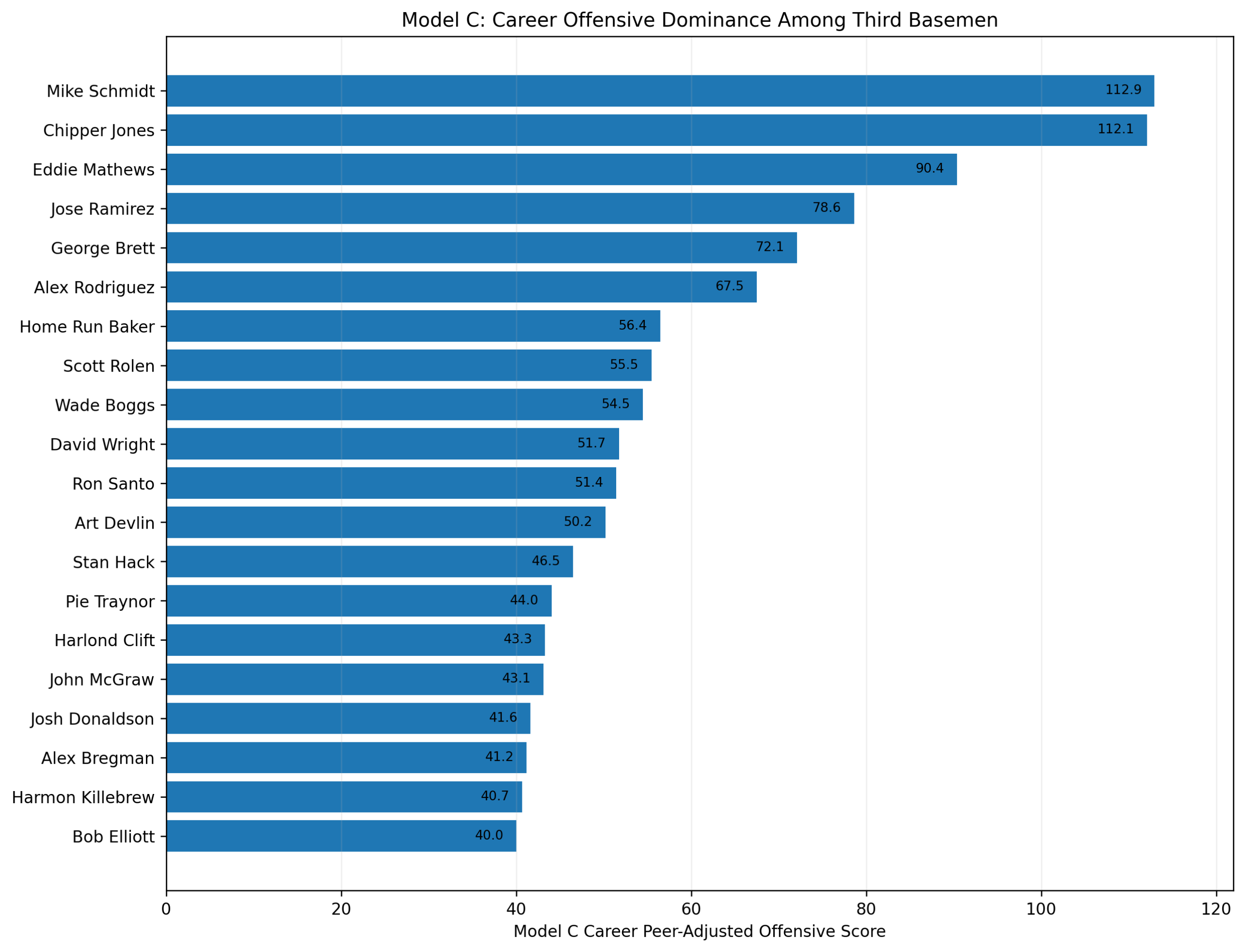
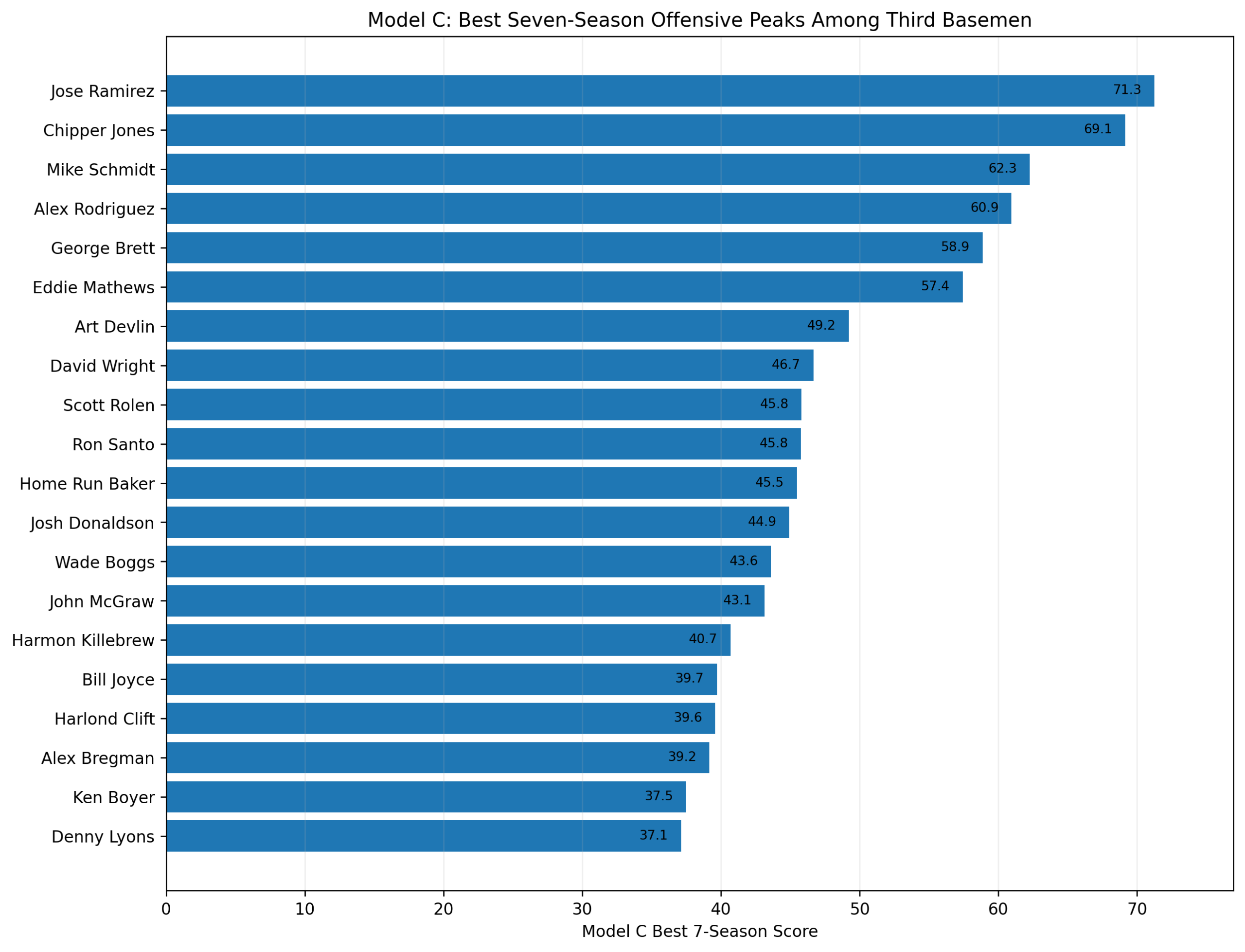
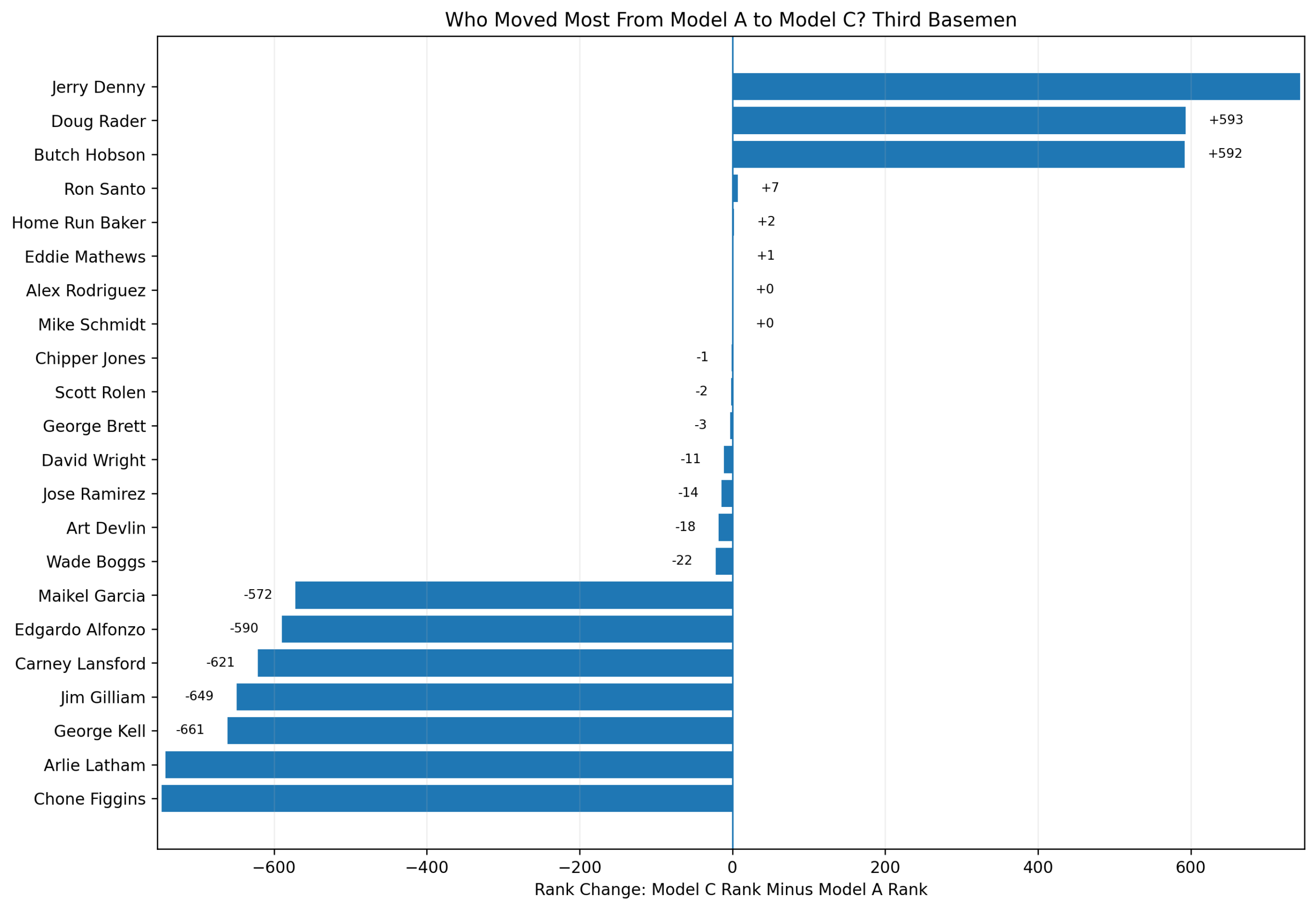
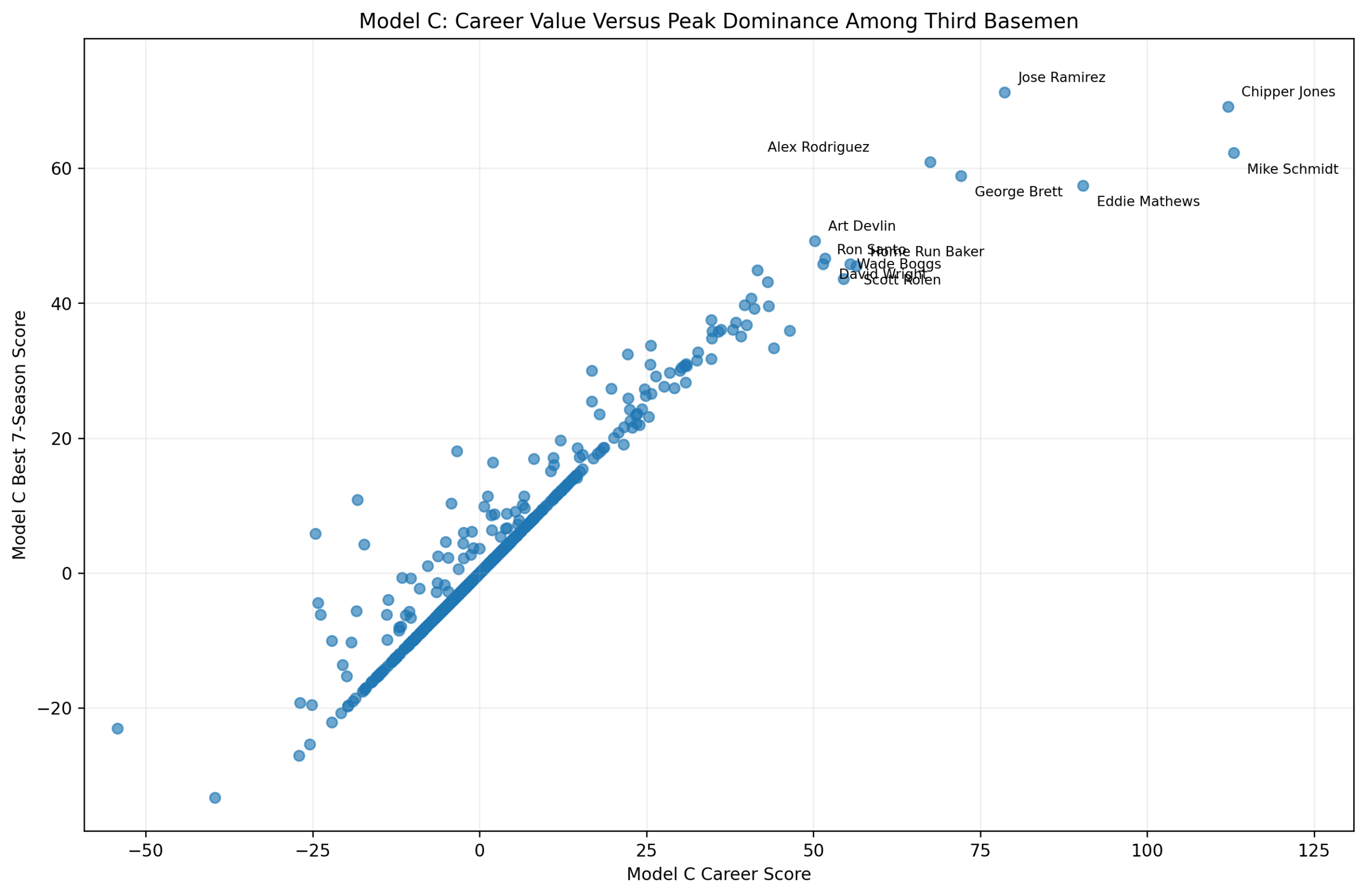
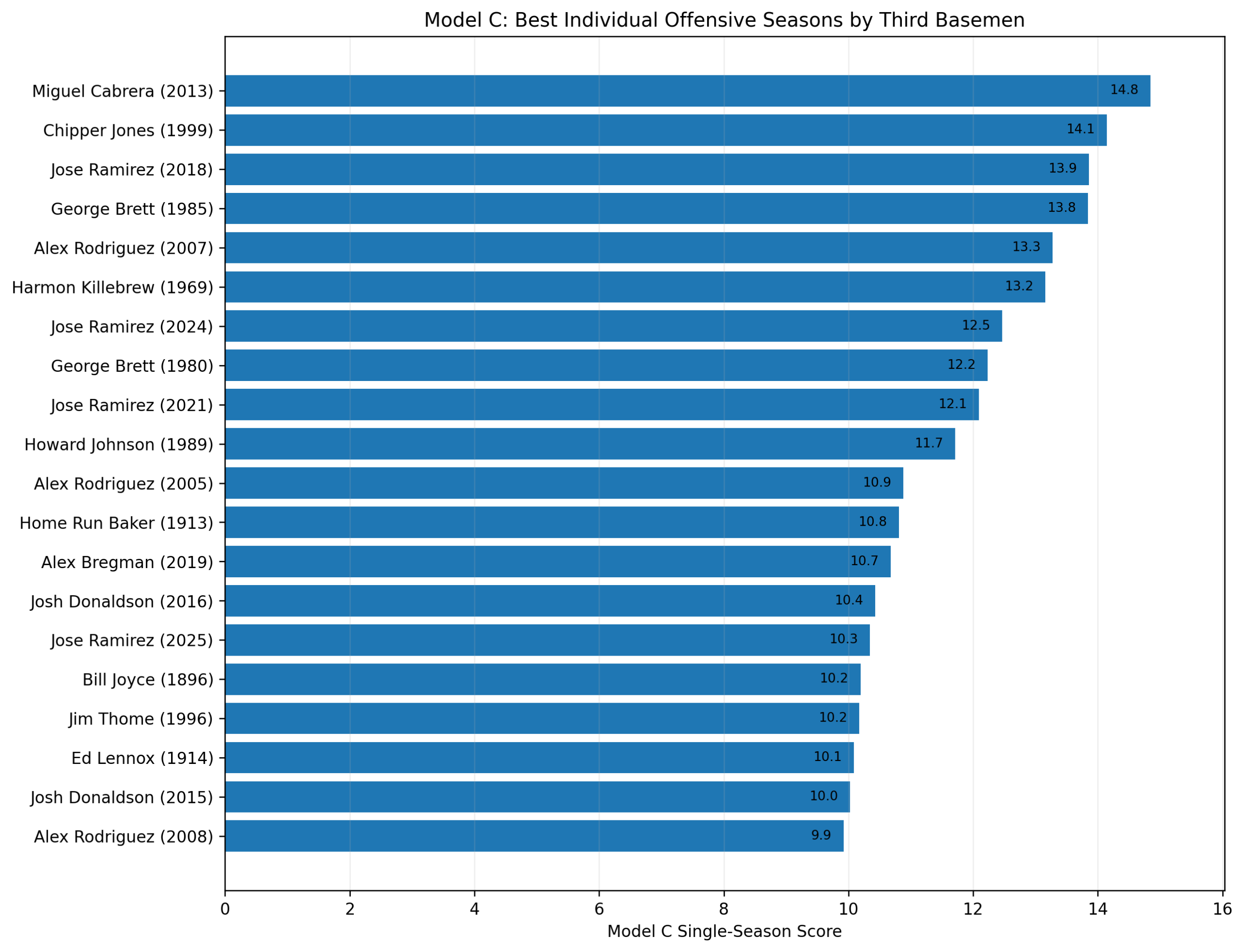
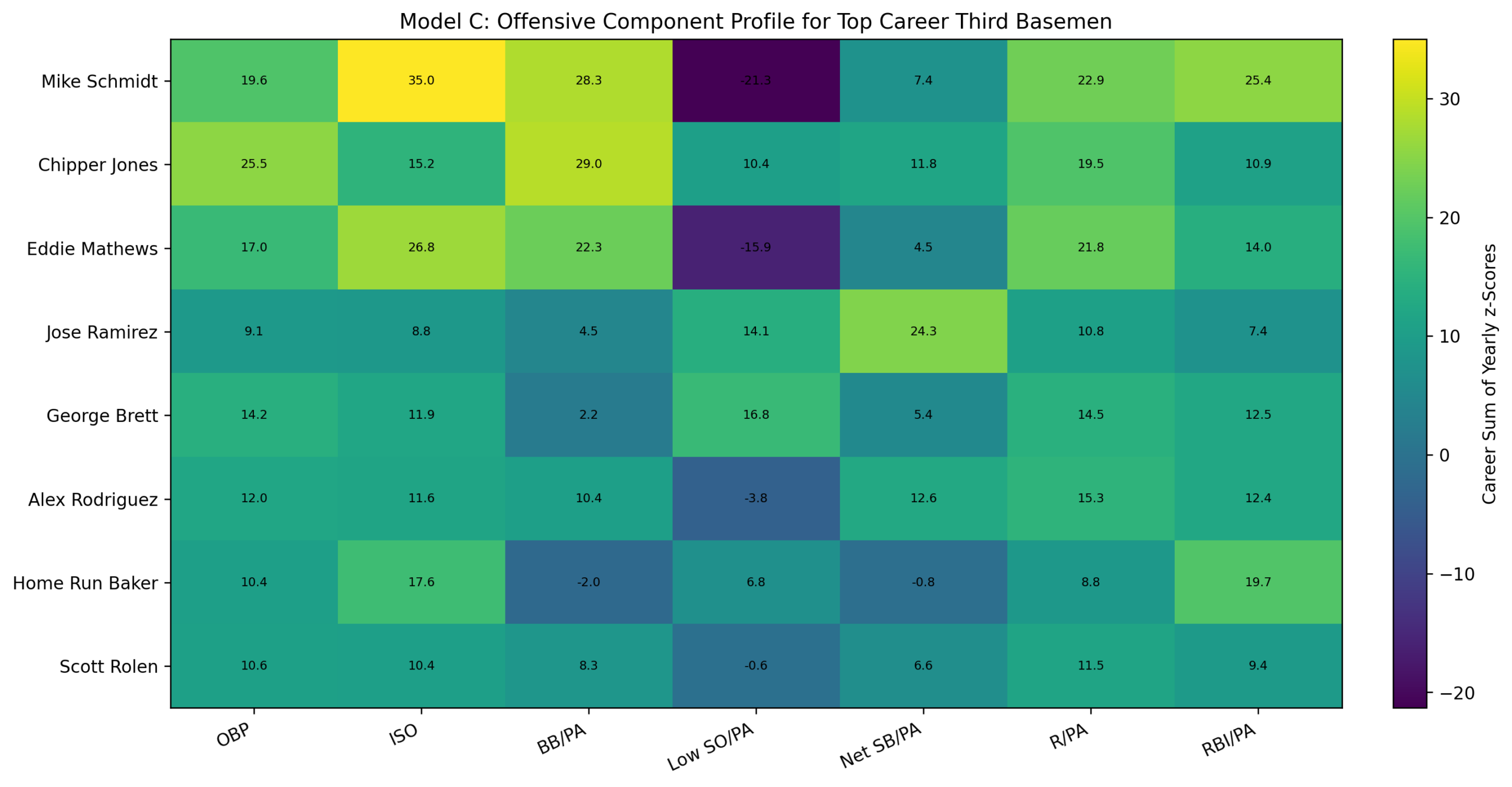
That gives the averageness study a useful interpretive role. The dominance chapters tell us what greatness at third base looked like: Schmidt, Chipper, Mathews, Jose Ramirez, Brett, Boggs, and others.
This chapter tells us what the center looked like: Blake, Zeile, Garner, Bluege, McMullen, Wigginton, and others.
The two ideas need each other.
Without the center, dominance has no reference point.
Without the outliers, the center has no contrast.
Average Does Not Mean Replaceable
It is important not to confuse average with replacement level.
The players in this chapter were qualified regulars. They met playing-time and positional thresholds. That means they were good enough to hold major-league jobs and play substantial time at third base.
Average among qualified regulars is not the same thing as average among all possible players. The pool has already been filtered. These are not random minor leaguers or bench players. They are major-league third basemen who played enough to qualify in the study.
That makes the term “average” more meaningful.
A qualified average regular has value. He gives a team stability. He fills a position. He avoids collapse. He may not define greatness, but he helps define the league.
In that sense, this chapter is not about mediocrity. It is about the structure of normal professional competence.
Conclusion
The third-base averageness study reverses the logic of the dominance chapters.
Instead of asking who stood farthest above the positional norm, it asks who stood closest to it.
The main results are:
Most average Model C third-base season: Lonnie Chisenhall, 2014
Most average combined Model A / Model C regular: Casey Blake
Best long-career examples of third-base averageness: Todd Zeile, Willie Jones, Ossie Bluege
The most important conclusion is not simply that Casey Blake ranks first. The deeper conclusion is that averageness can be measured, and that it reveals a different part of baseball history.
Great players define the limits of the game.
Average regulars define the middle of the game.
The middle is not glamorous. It does not usually produce monuments. But it is where the position lives most of the time.
Third base, in this framework, is not only Schmidt, Chipper, Mathews, and Brett. It is also Casey Blake, Todd Zeile, Willie Jones, Phil Garner, Ossie Bluege, and Ken McMullen.
They are the center of the distribution, and without the center, there is no such thing as an outlier.


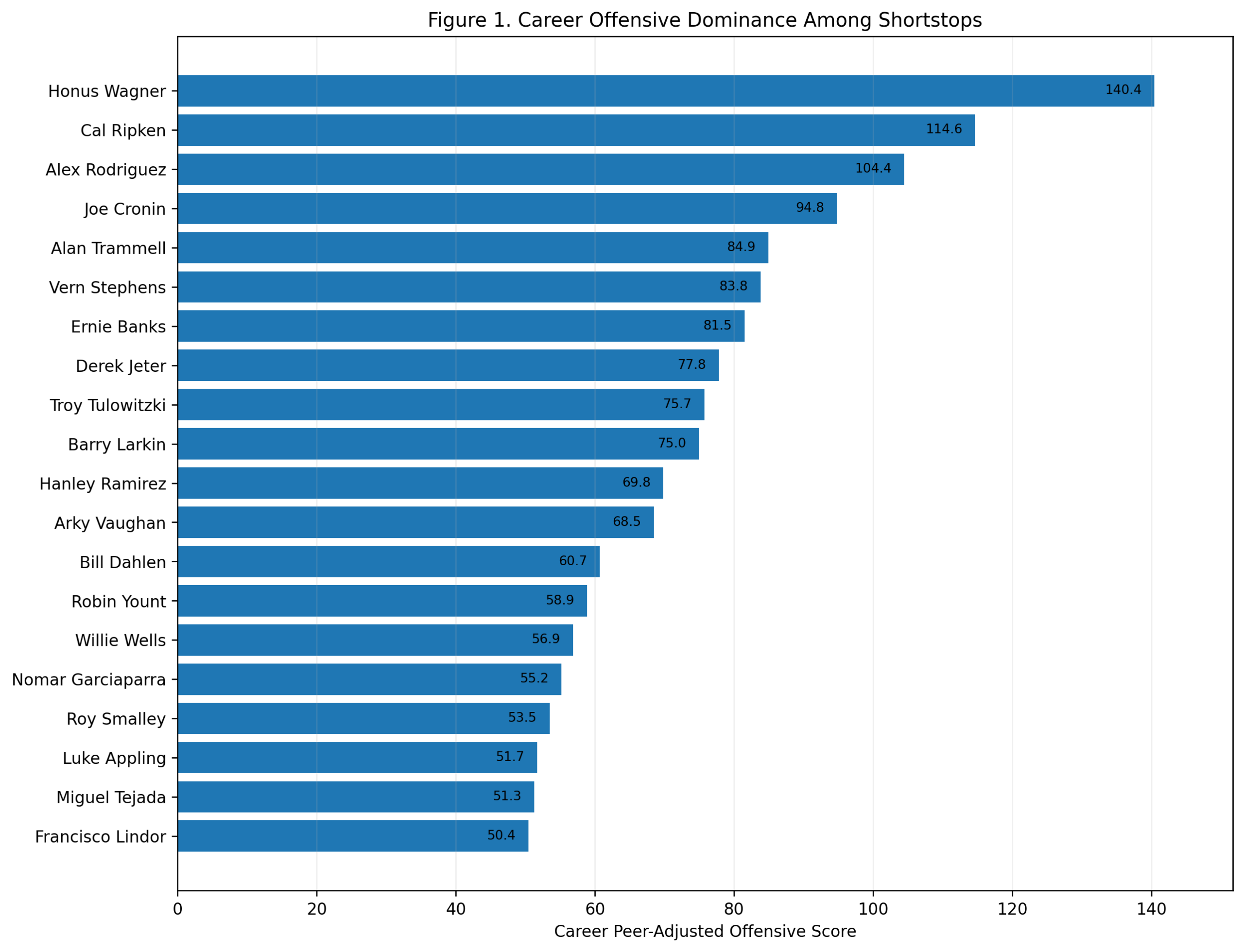 The career ranking begins with Honus Wagner.